
Knowledge Management | SaaS | B2BOne Deck Can't Serve Three use cases with three audiences
The Situation
A growth-stage B2B SaaS company — $15M ARR, selling knowledge management software to mid-market and enterprise buyers across financial services, healthcare, CPG, and IT — came in with a specific ask: a champion deck their reps could share internally to move deals forward. Marketing had already built a first call deck, but Sales wasn't using it.
THE DIAGNOSIS
The real problem wasn't the deck. It was that the product served three fundamentally different use cases — research and insights teams, customer support operations, and org-wide knowledge bases — each with different buyers, different pain points, different competitors, and different KPIs. The existing deck tried to speak to all of them at once, landing on benefits generic enough to fit everyone and compelling enough for no one. Reps knew it. They never adopted slides they couldn't believe in. The translation gap wasn't a messaging problem — it was a targeting problem disguised as one.
The shift
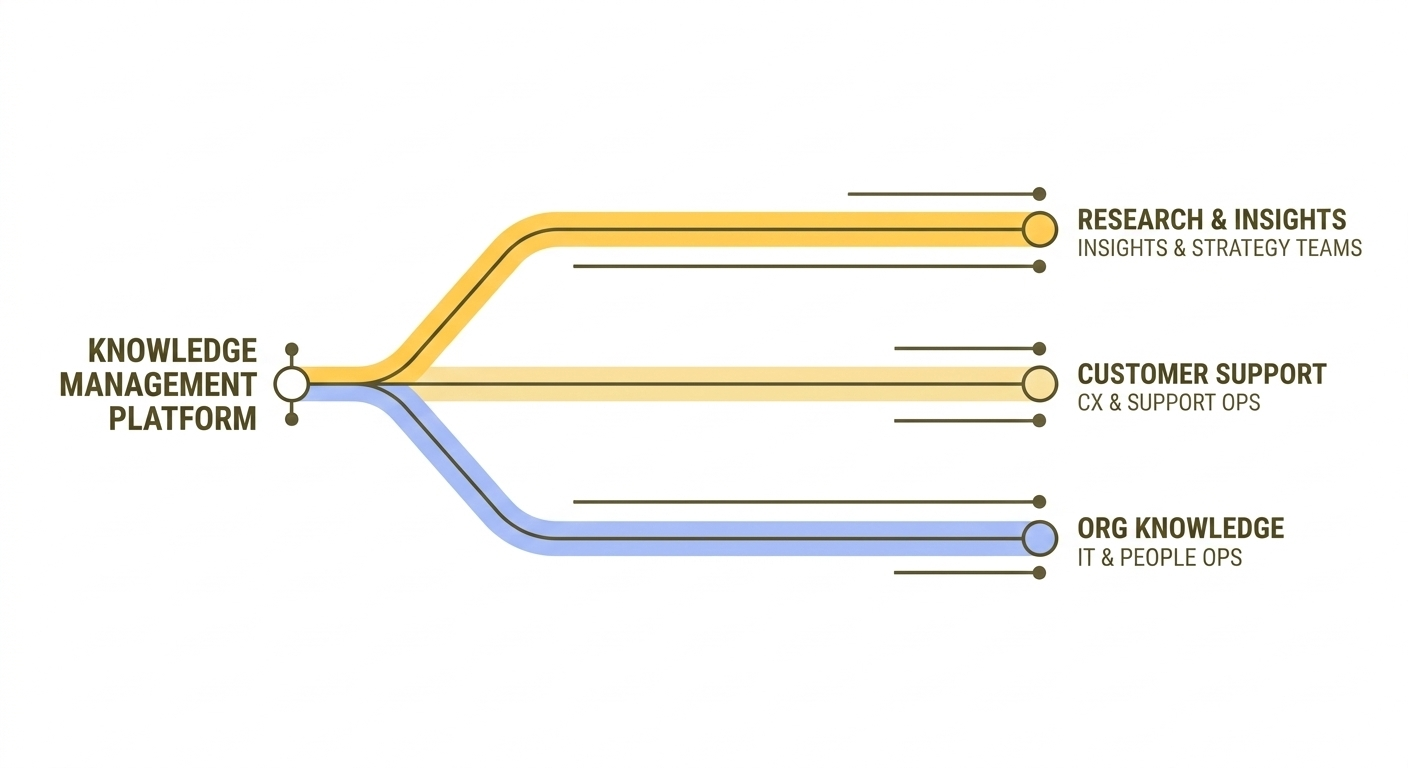
Three decks were created for champion selling. Each built around the specific pains, quantified stakes, and competitive landscape of its buyer. Language came from the field: sellers were asked directly what buyers always pushed back on, what slides they were building themselves, what follow-up questions killed their deals. That input shaped the core of each deck.
The outcome
Reps adopted the decks immediately — using them as post-demo follow-up as intended, and even pulling slides into their intro flow. Marketing used sections for analyst briefings, resulting in mentions across multiple Forrester and Gartner buying guides and articles outside of formal MQ/Wave cycles.
before
"The ROI of Knowledge Engagement"
after
"100% of customers say that being data-driven allows them to be more cost-efficient"
"Research professionals consistently struggle with knowledge sharing challenges"
"Your Ecosystem, In One Place"
why it matters
The before was fluffy enough to mean anything — which meant it moved no one.