Sales assets your team will actually use
Your sales deck doesn’t suck because of the design or copy.
but because product, marketing, and sales aren’t telling the same story.
I find the disconnect, fix it fast, and turn it into assets your reps won’t reject.





Your product works.
But the way you talk about it is all over the place — and it’s costing you.
Your product is solid. Your story? Kind of a mess.
Everyone on your team tells a different story - and buyers can tell
Marketing leads with whatever they wish buyers cared about. Sales rewrites everything because "this won't land in a real convo." Product insists on language no buyer has ever said out loud.
Real cost: Your story falls apart the moment the zoom call is over.
Your assets aren’t the problem. The disconnect is.
The deck crushed it in the launch meeting. Two weeks later, reps quietly stopped using it.
Not because the design is bad. Because it doesn't match how buyers actually think or decide. So reps hack together their own version — or wing it and hope.
Real cost: You’re producing content no one trusts, and everyone ignores.
Deals stall because champions can't sell you internally
Your champion loves the one-pager. The CFO, CTO, and VP of Ops aren't buying it.
So your champion walks into internal meetings without a story anyone else understands — and you're not in the room to help. The dots don't connect. The deal stalls.
Real cost: Multi-threading collapses and deals die quietly.
Here's what's actually happening
Sales assets that don’t land are a symptom, not the problem.
Sales doesn't believe them—not because your team can't write or design, but because secretly no one agrees on the story you're telling.
Your champion isn't buying alone.
They have to sell you inside their company — to Finance, Ops, Engineering — without you in the room.
A list of features and benefits won't get them through that. Deals move when your champion can resell your story clearly. Deals stall when they can't.
Your assets need to make their internal sell easy — or the deal dies.
I find the signal in the noise. I’ve sat inside enough deals, across enough companies, to see exactly where the story breaks down and why. Your team can’t see it from the inside. Your reps won’t say it out loud if you’re the one asking.
Someone who’s done this 50 times can get you there in weeks. You spend the rest of the year proving what happens when the whole team is finally telling the same story.
We’ll fix the story first,
then build the assets that make sense to your buyers—and actually get used in the field.
“Talya is quite literally lightening in a bottle. She made an almost immediate impact.”

“Our space is very active and changes constantly. She helped us find white space and ways that we could stand out in the crowd”

“An amazing partner in refining our product and competitive positioning. Sales identified the deck as the critical missing gap. Her organization and ability to get up to speed on the unique market is unmatched, not to mention, she’s just a joy to interact and collaborate with”
Here’s how it works
Step 1: diagnosis
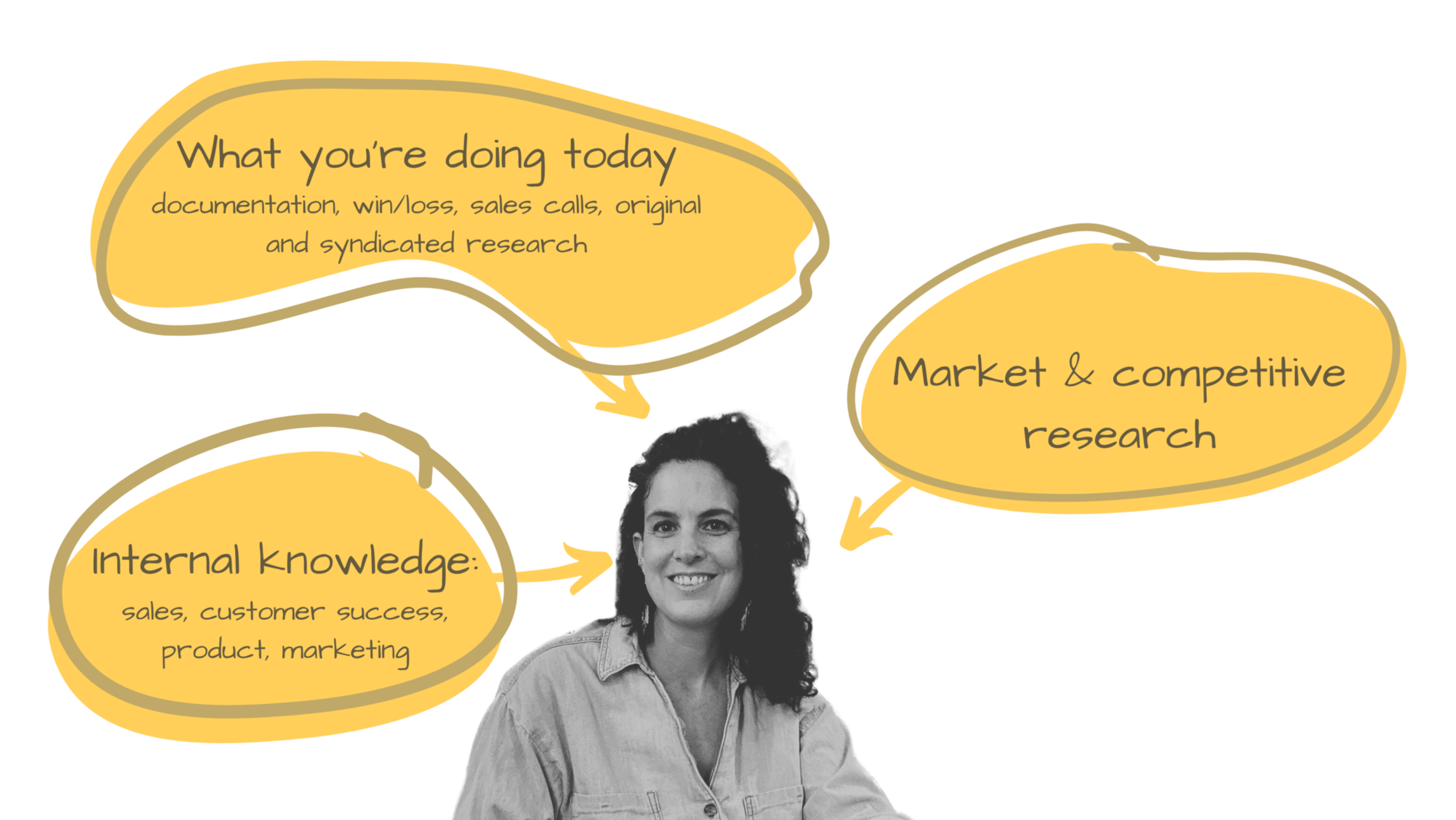
I don't need seven workshops. Three honest conversations with your SMEs, a look at what you're currently doing, and market and competitive research tell me everything.
What you get:
Understanding of what really closes deals
Clarity on where alignment breaks between teams
Immediate "oh Shoot, THAT's why" moments
Step 2: Build The Win Map™—your source of truth
I don't just hand you a positioning doc that dies in Slack. I build The Win Map™—a single source of truth your whole GTM team actually agrees on.
It connects market research, persona insights, competitive positioning and messaging into one coherent system. Product stops inventing language. Sales stops rewriting decks. Marketing stops guessing what lands.
Simple enough that reps use it on Monday. Structured enough to feed directly into your AI stack.
What you get:
One source of truth your whole GTM team agrees on
Messaging that holds up when buyers push back — and when reps go off-script
Competitive narrative that holds up when buyers push back
Positioning that product, marketing, and sales believe in
Use as-is or feed to your AI stack directly — no reformatting required
Step 3: Sales enablement that survives the field
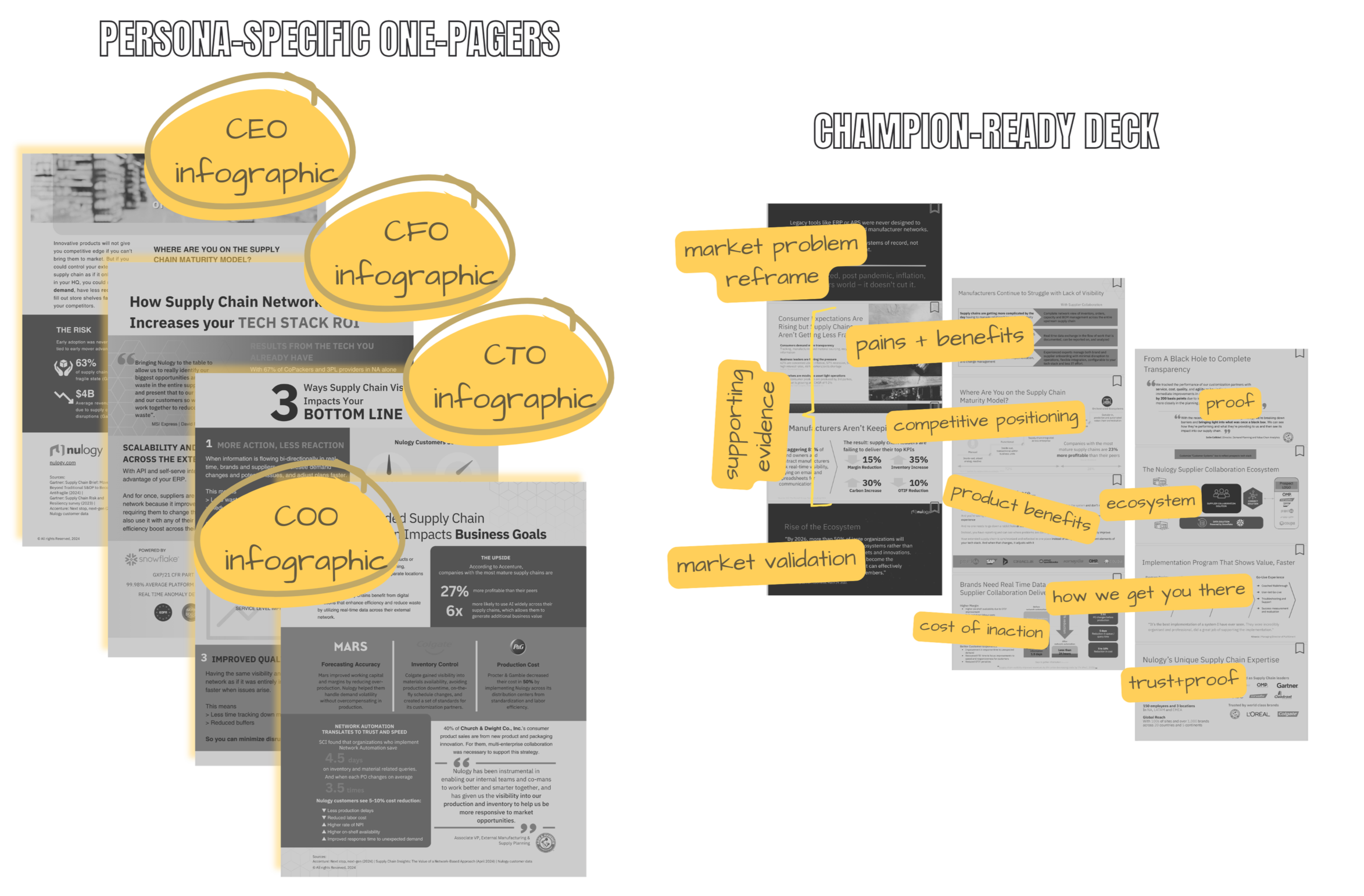
Your assets work because they're built on alignment, not assumptions. Sales believes them. Champions can sell internally with them. Deals close faster.
What you get:
Executive one-pagers for the invisible people in the buying team
Sales deck reps have conviction on
All connected back to your Notion clarity system
Pricing
Most full engagements run $30–45K depending on scope, research depth, and number of assets. Advisory starts at $2,500/month for teams that need strategic guidance while they execute internally.
The right scope depends on what's actually broken and how much bandwidth your team has to execute. After our diagnostic call, I'll recommend what fits based on:
- Whether you need the system built or strategic guidance while your team executes
- Number of products, use cases, or personas
- Complexity of your competitive landscape
frequently asked questions
-
Yes, you work directly with me.
I developed this framework years ago and it hasn’t failed me since. While I might get outside assistance with additional research, for example, you and I work together directly and I’m in charge of all the deliverables.
-
Projects depend on scope and complexity. A full Win Map™ system and asset creation usually takes between 4-12 weeks, depending on portfolio size and the the number of assets needed.
-
Yes. Some clients start with Advisory to test fit, then move to a larger project when they realize the problem is bigger than they thought.
-
Former Fletch clients can work with me just for assets, and in any advising capacity.
Assets
As long as the positioning Fletch PMM provided you is still relevant, I can work with their framework for asset creation. Note this process is entirely different, and does not include the Win Map™ system or further positioning work.
If you’re interested, book a call and we can discuss the details.



FEATURED ON